

Skin infections can be more prevalent than people believe. It doesn’t matter if it’s a tiny red bump or a swollen skin rash; knowing what signs to look out for will assist you in identifying the problem and receiving the proper treatment. This article outlines the main signs of skin infections and the causes, and the best time to see a physician or get in touch with one on the internet.
What Are the Most Common Skin Infection Symptoms?
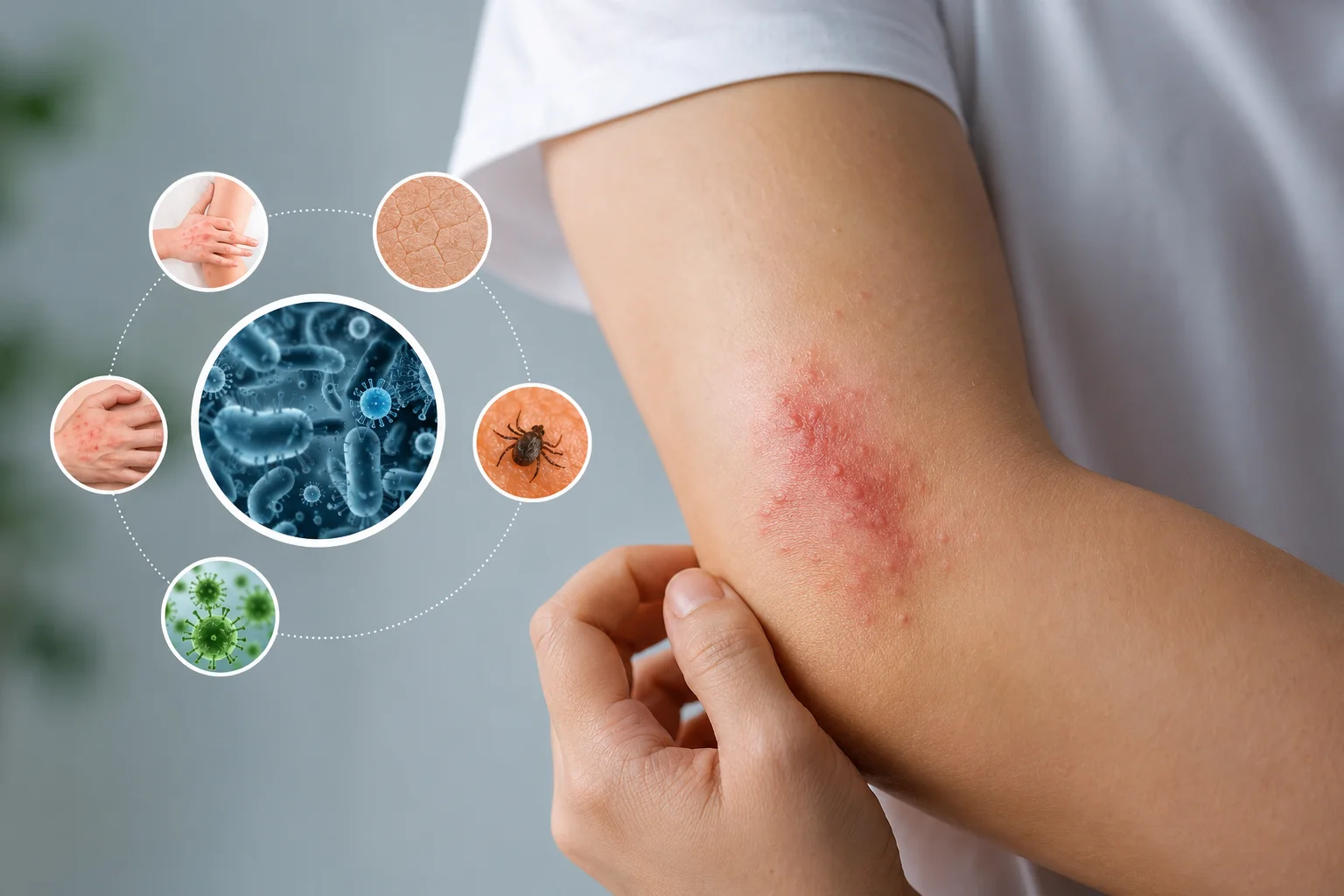
Skin infections can manifest in a variety of ways. The symptoms are based on what type of disease as well as the location it’s in your body. The majority of skin infections share certain common warning signs:
- The area affected may be red or have discoloration. affected region
- The sensation of swelling, warmth, or tenderness at the contact site
- Itching or pain that won’t disappear
- Pus or fluid that drains from the skin
- Blisters, sores, or crusty patches
- Chills or fever (an indication that the infection could be growing)
If you observe any of these symptoms, do not ignore these signs. Skin infections can quickly get worse if not treated.
What Causes Skin Infections?
Skin infections are typically caused by viruses, bacteria, or fungi. They can also be caused by parasites, bacteria, or fungi. Here’s a quick breakdown:
-
Bacterial Infections
This is the most frequent kind. Staph and streptococci are the most common culprits. Conditions like impetigo, cellulitis, and boils belong to this category. Most often, they begin with a scrape, cut, or a bite of an insect, which allows bacteria to enter the skin.
-
Fungal Infections
Ringworm, athlete’s foot, and yeast infection are all fungal. They thrive in humid, warm conditions. You are more likely to be affected if you sweat frequently and wear tight clothing or have a weak immune system.
-
Viral Infections
Cold sores, chickenpox (herpes simplex), as well as shingles and warts are all caused by viruses. They can be spread through skin-to-skin contact or when touching surfaces contaminated.
-
Parasitic Infections
Lice and Scabies are two examples of parasites living in or on the skin. They’re highly infectious and frequently are spread by people in crowds.
Who Is at Higher Risk of Getting a Skin Infection?
Everyone can get a skin infection; however, certain individuals are more at risk of infection than others:
- Patients with diabetes, since high blood sugar can slow healing
- People who have a weak immune system as a result of illnesses or medications
- Individuals who have had recent procedures or skin injury
- Athletes and people who use towels and equipment together
- Children and adults over the age of 65 tend to have more sensitive skin
How Can You Tell If a Skin Infection Is Getting Worse?
Skin infections can be moderate and then clear by themselves. However, some can become more severe. Be aware of these warning signs that suggest something more serious is going on:
- This red region is expanding or spreading quickly.
- The red streaks appear in the area of the wound; this could be a sign of the presence of blood poisoning.
- You are suffering from a fever, or you feel extremely unwell
- The skin’s color is changing to dark or is forming open sores
- The remedies available over the counter don’t work after a couple of days
These are indicators that require medical attention immediately. Do not put it off.
When Should You See a Doctor for a Skin Infection?
An unintentional cut that turns slightly red may not require a visit to a physician. But certain situations definitely do:
- The infection does not improve after a few days of care at home
- You are suffering from a fever of 100.4degF (38degC)
- The infected region is on your hands, face, or your genitals
- You suffer from a chronic disease such as diabetes or an afflicted immune system.
- The infection is spreading quickly.
It is important to seek treatment early. The sooner you take care of any skin problem, more easily to manage.
Can You Get Help for Skin Problems Without Going to a Clinic?
Yes. And that’s where telehealth can bring about a dramatic change. If you’re located in an area that is remote or aren’t able to get to a medical facility promptly, Telehealth for Skin Problems Alaska is a viable solution that connects you to licensed practitioners at the convenience of home.
A variety of skin conditions are diagnosed through an audio or video conference, or photographs of the area affected. A doctor can look over the signs of skin inflammation and ask questions regarding your history with regard to medical conditions and recommend the best treatment without leaving the house.
For Alaskans particularly, where the distances between clinics can be large, this type of accessibility isn’t just practical, but can transform lives.
How Can You Prevent Skin Infections?
The importance of good hygiene can go far in the prevention of many skin diseases:
- Cleanse your hands frequently, particularly after touching any wounds
- Keep scrapes and cuts free of dirt and covered
- Do not share personal items such as razors, towels, or even clothing
- Maintain dry, moisturized, and clean skin to prevent cracks
- Remove sweaty clothing immediately after working out
Small changes can make a huge difference in the fight against infections.
Conclusion
The process of dealing with skin infections is stressful, especially when you’re not sure of the severity of the problem or if you should take it to a specialist. But the good news is that you don’t have to.
Telemedicine Alaska is a trusted service for people in need of fast, efficient care, and that includes those who are looking for Telehealth for Skin Problems Alaska. With licensed and experienced specialists available online, you are able to explain your symptoms, upload images of the area affected, and get an assessment and treatment plan regardless of where you are.
If you’re living in Anchorage, Fairbanks, or an isolated village, high-quality health care should be within reach. Telemedicine Alaska allows you to get the attention that your skin requires when you’re in need of it the most.
Do not wait until a minor illness becomes a larger issue. Call Telemedicine Alaska today and get the help you need quickly, securely, and comfortably at home.