


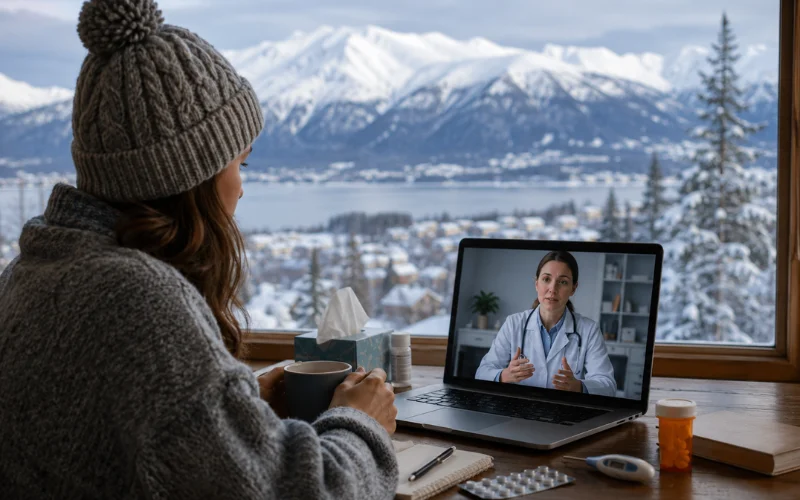
Living in rural Alaska comes with a kind of resilience that most people never have to develop. You learn to prepare for the unexpected — whether that’s a storm that shuts down the roads for days or a power outage in the dead of winter. But one thing that still catches people off guard, even long-time residents, is getting sick during flu season when the nearest clinic is an hour away on a good day.
This guide is written for people who know what it means to be far from a hospital when things go wrong. Whether you’re in a remote village, a small off-grid community, or a town where the health clinic is only open twice a week, here’s what you need to know to handle the flu safely.
Why Alaska Flu Season Hits Harder in Remote Areas
Flu season in Alaska typically runs from October through March, but in many parts of the state, the challenges go beyond just the virus itself. When temperatures drop to -20°F and roads become impassable, what might be a manageable illness anywhere else can quickly become an emergency.
The combination of extreme cold, limited sunlight, and close indoor living makes communities more vulnerable to spreading illness fast. In small villages, one sick person can infect an entire household within days. And if someone’s condition worsens, getting them to a hospital isn’t as simple as a 20-minute drive.
That’s why preparation matters more here than almost anywhere else in the country.
Know the Symptoms — and Take Them Seriously Early
The flu doesn’t always announce itself clearly at first. Many people mistake the early signs for a bad cold and wait too long before taking action. In Alaska’s remote areas, waiting is a risk you can’t afford.
Common flu symptoms include:
- Sudden onset of fever or chills (often above 100.4°F)
- Body aches that feel significantly worse than a regular cold
- Extreme fatigue that makes it hard to get out of bed
- Dry cough and sore throat
- Headache
- Stuffy or runny nose
- Nausea, vomiting, or diarrhea (especially in children)
The key difference between flu and a cold is how fast the symptoms come on and how severe they feel. With the flu, most people go from feeling fine to feeling awful within a few hours.
If you’re in a remote area, the moment you recognize flu symptoms, start treating them and consider reaching out to a medical provider — don’t wait to see if it gets better on its own.
Prepare Before Winter Arrives
The best time to prepare for flu season is before you actually need anything. Once you’re sick, the last thing you want to do is realize your medicine cabinet is empty or your thermometer is broken.
Stock up on these basics before October:
- Acetaminophen or ibuprofen for fever and body aches
- A reliable digital thermometer
- Cough syrup and decongestants
- Electrolyte drinks or powder (like Pedialyte or Liquid I.V.)
- Herbal teas, broth, and easy-to-prepare soup ingredients
- Hand sanitizer and face masks
- A list of emergency contacts — your local health clinic, the nearest hospital, and a telemedicine provider
Get the flu vaccine. This is the single most effective thing you can do. The vaccine significantly reduces your chance of getting the flu and, if you do get sick, it often makes the illness much milder. Many Alaska health clinics offer flu shots in September and October — some even do mobile vaccination clinics in remote communities. Check with your local tribal health organization or the Alaska Native Tribal Health Consortium for options near you.
Use Telemedicine — It Was Built for Situations Like This
One of the most practical resources for rural Alaskans during flu season is telemedicine. It lets you speak with a licensed medical provider by video or phone without leaving your home — which matters enormously when roads are icy, temperatures are dangerous, or you simply don’t have the energy to travel.
Telemedicine services can help you:
- Get a professional assessment of your symptoms
- Determine whether your flu can be managed at home or needs in-person care
- Receive prescriptions for antiviral medications like Tamiflu, which work best when started within 48 hours of symptoms beginning
- Get guidance on caring for children, elderly family members, or anyone with underlying health conditions
- Schedule follow-up calls if your condition changes
If you live in a remote area of Alaska, setting up a telemedicine account before you get sick is strongly recommended. Know the service, know how to log in, and have your insurance information ready. When you’re sick with a 103°F fever is not the time to be creating a new account and figuring out how the video call works.
Telemedicine Alaska connects residents throughout the state with licensed providers who understand the unique challenges of rural Alaska healthcare.
Rest and Hydration Are Not Optional
It sounds simple, but rest and fluids do more for flu recovery than most people give them credit for. The flu causes your immune system to work overtime, and dehydration can happen faster than you expect — especially with a fever.
Practical tips for recovery at home:
- Drink warm liquids consistently throughout the day — water, broth, herbal tea, diluted juice
- Watch for signs of dehydration: dark urine, dizziness, dry mouth, or not urinating for several hours
- Sleep as much as your body is asking for — this is not laziness, it’s how you heal
- Eat small amounts of easy-to-digest food: soups, crackers, bananas, toast
- Keep your home warm but not stuffy — fresh air circulation matters, even in winter
- Stay away from alcohol, which dehydrates you and can interfere with your body’s immune response
If you live alone in a remote area, tell someone you trust — a neighbor, a family member — that you’re sick. Check in with them daily. This isn’t overcaution; it’s just smart.
Know When It’s a Medical Emergency
Most flu cases resolve on their own within 7 to 10 days with proper home care. But some situations require immediate medical attention, and in remote Alaska, recognizing those warning signs early is critical — because getting help takes time.
Call for emergency help or arrange transport immediately if you or someone in your care has:
- Difficulty breathing or shortness of breath
- Chest pain or pressure
- Lips or fingernails turning bluish (this is a serious sign)
- A high fever that won’t come down with medication
- Confusion, disorientation, or unusual difficulty staying awake
- Severe vomiting that prevents keeping any fluids down
- Symptoms that seemed to be improving and then suddenly got much worse
Children under 5, adults over 65, pregnant women, and anyone with conditions like diabetes, heart disease, asthma, or a weakened immune system are at higher risk of serious complications. These individuals should be monitored more closely and considered for telemedicine or in-person evaluation earlier in the illness.
Prevent Spreading the Flu in Small Communities
In tight-knit communities — whether it’s a village of 200 people or a small off-grid neighborhood — the flu can spread through a group very quickly. Basic hygiene habits make a real difference.
- Wash your hands frequently with soap and water for at least 20 seconds
- Cough or sneeze into your elbow, not your hand
- Avoid sharing cups, utensils, or towels with other household members
- Wipe down commonly touched surfaces — door handles, light switches, phones — regularly
- Stay home and away from others when you’re sick, even if you feel well enough to move around
- Wear a mask if you need to be around others while still symptomatic
In communities with limited healthcare access, one outbreak can overwhelm what little medical infrastructure exists. Doing your part to limit the spread protects everyone, especially the most vulnerable.
If You’re Traveling Through Alaska During Flu Season
Alaska draws workers, hunters, fishermen, and outdoor adventurers year-round — and getting sick while traveling in a remote area presents its own challenges. You might be far from your regular doctor, unfamiliar with local resources, and without reliable internet access.
Before you travel, take these steps:
- Check whether your health insurance covers telemedicine across state lines
- Download a telemedicine app and set up your account before you leave home
- Carry a basic first-aid and illness kit with fever reducers, throat lozenges, and electrolyte packets
- Keep your phone charged and know the emergency numbers for the areas you’re visiting
- Have a copy of any regular medications and relevant medical history accessible
If you get sick while traveling in a remote part of Alaska, telemedicine can give you access to medical advice no matter where you are, as long as you have cell or satellite service.
Final Thoughts
Flu season in Alaska is serious business — especially if you’re far from a hospital or clinic. But with the right preparation, the right supplies, and access to telemedicine, most cases can be managed safely without dangerous winter travel.
The biggest mistake people make is waiting too long. Start treating symptoms early, stay in contact with a medical provider when you’re unsure, and don’t hesitate to seek emergency help if warning signs appear.
You already know how to handle Alaska’s winters. With a little preparation, you can handle flu season just as well.
For virtual healthcare across Alaska — whether you’re a long-time resident, a seasonal worker, or a traveler — Telemedicine Alaska provides access to licensed medical providers from wherever you are in the state.