

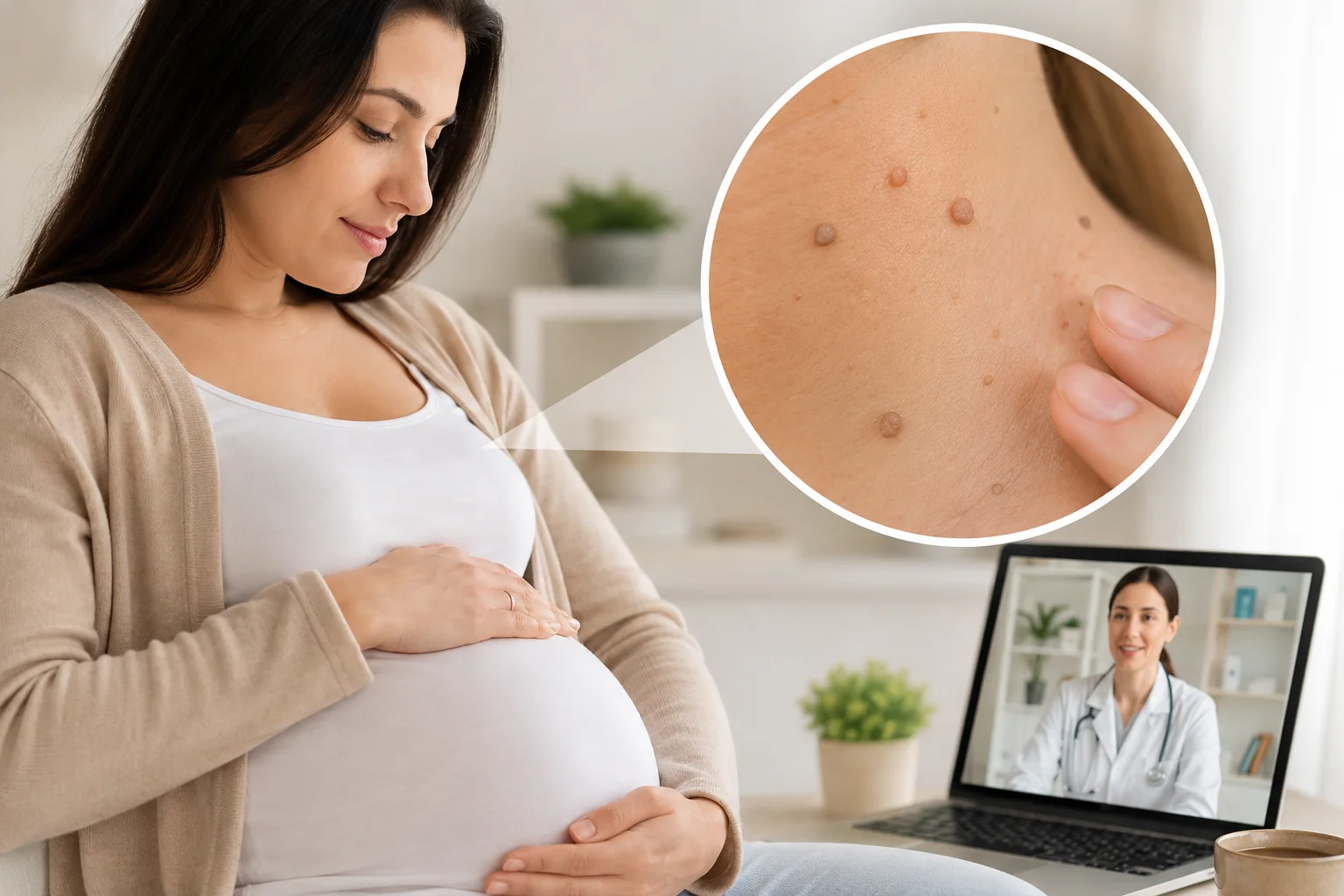
The process of pregnancy brings a variety of physical changes; skin tags are among the most popular (and most under-appreciated) ones. If you’ve noticed a few small skin growths that appear soft around your underarms, neck, groin, or chest, there’s no reason to be worried. A lot of pregnant women experience this, and it’s normal to ask yourself how you can deal with these growths.
What Are Skin Tags and Why Do They Show Up During Pregnancy?
Skin tags are small, harmless skin flaps hanging off the body via a fine stalk. They’re not painful, they’re not infectious, and they’re not dangerous; they’re only irritating.
During pregnancy, your body experiences major hormonal changes, with an increase in progesterone and estrogen. These hormones can accelerate the growth of skin cells. Plus, add the increase in weight and friction between skin and skin, which is a sign of pregnancy, and skin tags are likely to develop.
They typically appear in folds of the skin — like the neck, armpits, or under your breasts or the inner thighs. They are most commonly seen in the third and second trimesters.
Can You Get Skin Tags Removed While Pregnant?
It’s probably the most frequently asked inquiry, and the real answer is: it’s a matter of personal preference.
The majority of doctors suggest waiting until after the birth for elective procedures, such as removal of skin tags. The reason is straightforward -the body is already in a stressful state, and any procedure that isn’t necessary (even the smallest one) can pose a risk in pregnancy.
But if the skin tag causes you real discomfort, such as frequently rubbing against your clothes or causing irritation, your doctor may recommend removal in a safe and controlled environment.
The word that is used there is elective. The Skin tags during pregnancy removal is generally considered to be a cosmetic process, which is why it’s not a necessity.
What Removal Methods Are Safe During Pregnancy?
When you, along with your physician, determine that removal is necessary, there are a few choices that are typically thought to be less risky:
- Cryotherapy (Freezing): A small amount of liquid nitrogen is used to remove the skin tag. It’s easy and doesn’t normally require anesthesia.
- Ligation: A doctor places an affixed thread or suture at the bottom of the skin tag, stopping its blood supply. The tag eventually dissolves by itself. It is usually regarded as one of the less invasive alternatives.
- Snipping: A skilled practitioner can make use of scissors that are sterile or a scalpel to eliminate it swiftly. It might require a local injection of anesthetic.
It is crucial not to attempt Skin tags during pregnancy removal. Creams for removal over the counter or freezing kits, as well as the act of tying it off yourself, can result in bleeding, infection, or scarring — all risks you shouldn’t take while pregnant.
What Treatment Options Should You Avoid While Pregnant?
Some techniques that are acceptable in the absence of pregnancy pose a greater danger when you’re pregnant:
- Chemical treatments — A lot of cosmetic products have chemicals or acids, which aren’t tested for safety in pregnancy.
- Electrosurgery –Utilizes electrical current. This is typically avoided during pregnancy.
- Removal of lasers — Not generally suggested during pregnancy due to insufficient safety data.
If you are unsure, consult your OB-GYN or a dermatologist before you take any action.
Do Skin Tags Go Away After Pregnancy?
There’s good news: the majority of skin tags that show up during pregnancy fade or disappear completely when you have your baby and hormone levels are restored to normal. This is another reason why doctors advise waiting to remove the removal of skin tags during pregnancy.
If they don’t disappear by themselves after a couple of months post-partum, this is the best moment to plan a secure removal procedure.
When Should You Call a Doctor About a Skin Tag?
The majority of skin tags aren’t harmful; however, you should contact your doctor if you spot:
- The skin tag can bleed even without touching it
- Rapid change in size, color, or even shape
- Acute or severe irritation of the region
- A growth that doesn’t appear like a normal skin tag
These signs may indicate something that requires a closer examination.
How Can You Manage Skin Tags Comfortably During Pregnancy?
Since waiting is typically the best option for a skin tag, here are a few strategies to keep skin tags comfy in the meantime.
- Wear breathable, soft clothes to minimize friction
- Make sure the area is dry and clean to avoid irritation
- Use gentle, fragrance-free products near sensitive skin
- Beware of tight bra straps and waistbands that rub against skin tags
A few small changes can make a significant difference in the quality of your life.
Also Read: Virtual Dermatologist in Anchorage
Conclusion
Telemedicine Alaska is a trusted telehealth service provider that connects pregnant women to expert medical professionals in the comfort of their home. If you’re unsure whether you can get skin tags removed while pregnant, or need advice regarding safe skin care in pregnancy, or need a professional opinion, without the stress of waiting in a waiting room, Telemedicine Alaska makes it easy.
You’ll get a personalized, real medical consultation without the stress of travel or delays in scheduling. For mothers who are expecting throughout Alaska, in addition to other states, the service is a simple and reliable method of taking charge of your health at each step of the process.
Your body is performing something amazing. Allow Telemedicine Alaska to help you navigate it with confidence.