


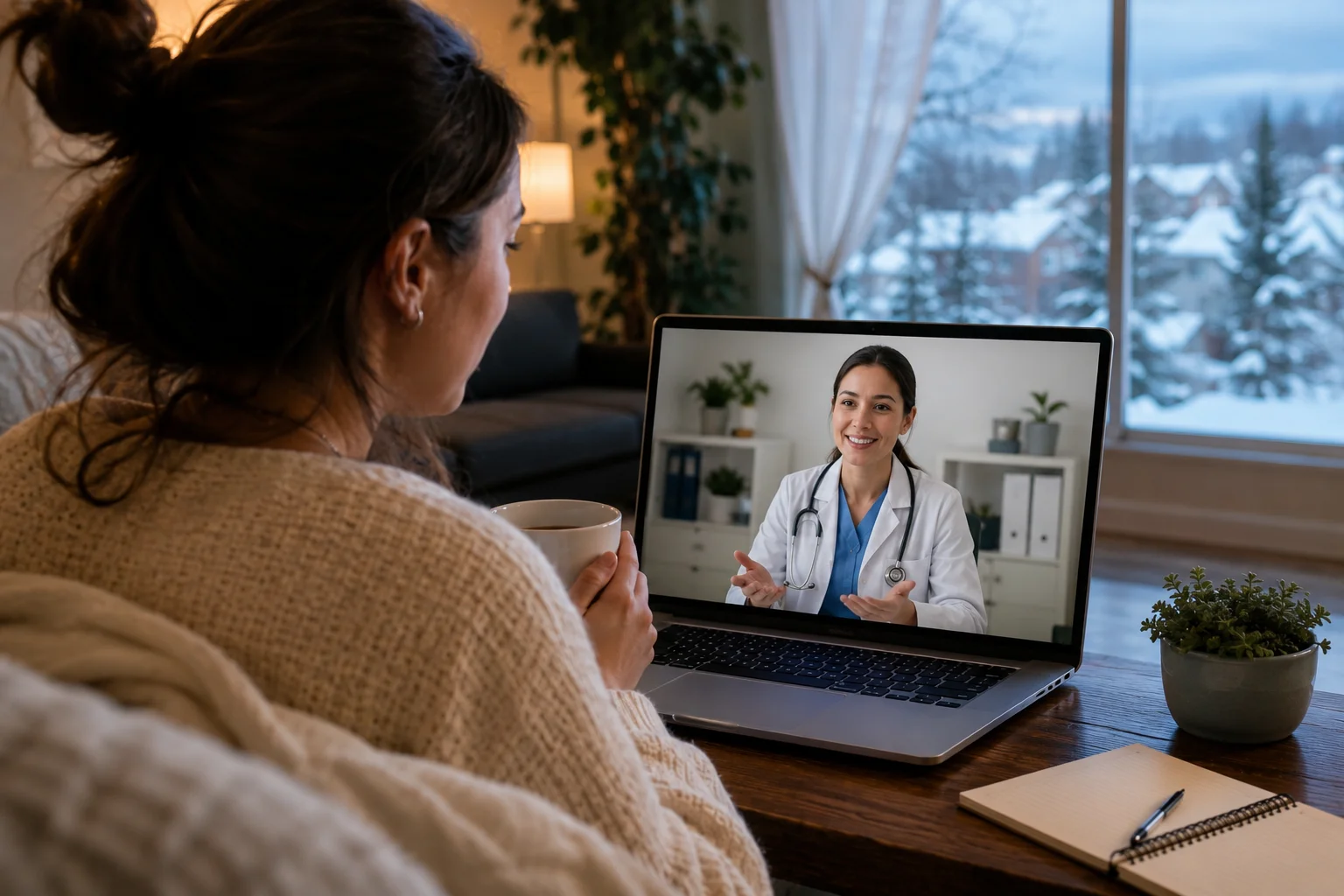
If you have lived in Fairbanks through even one January, you already understand why “just drive to the clinic” is not always realistic advice. At -40°F, a car that will not start, an icy patch on the Steese Highway, or a 20-minute drive that turns into an hour can be the difference between getting seen today and putting it off for a week. That is exactly the gap that telemedicine in Fairbanks, Alaska has started to fill, and it is why more residents across the Fairbanks North Star Borough are booking a video visit before they book a day off work.
This is not a trend piece. It is a practical look at how virtual urgent care actually works for people living in Fairbanks, what it can and cannot treat, and how to know if it is the right choice for what you are dealing with right now.
Why Does Fairbanks Need Telemedicine More Than Most Cities?
Fairbanks sits in Alaska’s Interior, roughly 360 miles north of Anchorage, and the geography here creates healthcare problems that a city like Seattle or Denver simply does not have.
A few things make Fairbanks unique:
- Extreme winter conditions. Temperatures regularly drop below -20°F between December and February, and black ice on roads like the Parks Highway and Chena Hot Springs Road makes even short trips risky.
- A large surrounding rural population. Communities like North Pole, Two Rivers, Ester, Salcha, and the areas along the Steese and Elliott Highways rely on Fairbanks for most specialty care, which means an already long drive gets longer for anyone outside city limits.
- A big military and student population. Between Eielson Air Force Base, Fort Wainwright, and the University of Alaska Fairbanks, there are thousands of people who move here from out of state and do not yet have an established local doctor.
- Limited walk-in capacity. Fairbanks has a handful of urgent care and family practice clinics, and same-day slots fill up fast, especially during flu season.
Put those four things together, and it becomes obvious why a same-day video visit from your couch is not a luxury here. It is often the fastest legitimate path to care.
What Can Actually Be Treated Through Telemedicine in Fairbanks?
This is the question we hear the most, and it deserves an honest answer rather than a marketing one. Virtual visits are excellent for common, non-emergency conditions where a provider can diagnose based on symptoms, history, and a visual exam over video. In Fairbanks specifically, the most common reasons people book a visit include:
- Cold, flu, and upper respiratory infections, which spike hard once the weather turns in October
- Sinus infections and allergies
- Minor skin issues, rashes, and irritation
- Follow-up medication questions for an existing condition
- Mild digestive issues
- UTIs and other conditions where a quick prescription can prevent things from getting worse
What telemedicine cannot do, and should never try to do, is replace emergency care. If you are dealing with chest pain, trouble breathing, stroke symptoms, a serious injury, or anything that feels like a true emergency, the right move is 911 or the Fairbanks Memorial Hospital emergency room, not a video call. A responsible telehealth provider will tell you this upfront and redirect you immediately if your symptoms fall outside what can be safely evaluated remotely.
How Does a Virtual Visit for Fairbanks Residents Actually Work?
The process is simpler than most first-time patients expect, and it usually takes less time than driving to a clinic and sitting in a waiting room.
- Book online. You choose a time that works, often the same day.
- Fill out a short intake form. This covers your symptoms, medical history, current medications, and allergies.
- Join the video visit. You connect from a phone, tablet, or laptop with a licensed provider who reviews your history before the exam even starts.
- Get a treatment plan. If a prescription is appropriate, it is sent directly to a pharmacy of your choice in Fairbanks, so you are not stuck waiting on paperwork.
Most visits run 15 to 30 minutes, and because the flat rate is set upfront, there are no surprise charges added after the fact. That upfront pricing matters a lot to people without insurance, or with a high deductible plan, since urgent care visits in Alaska can otherwise run well past $200 before any tests are added.
Is Telemedicine in Fairbanks Legal and Regulated?
Yes, and this is worth explaining because a lot of patients (understandably) wonder if a video visit carries the same weight as an in-person one.
Alaska has actively expanded telehealth coverage over the past several years. Alaska Medicaid covers a wide range of telehealth services, and the state’s Department of Health telehealth program outlines how these services are regulated and reimbursed. Providers seeing patients in Fairbanks must hold an active Alaska license, and prescriptions are handled under the same rules that apply to any in-person visit. In short, a legitimate telemedicine visit is a real medical appointment with a real medical record, not an informal chat.
Who Actually Uses Telemedicine in Fairbanks?
In practice, it is a much wider group than people assume:
- Parents who do not want to drag a sick child out into subzero temperatures for what turns out to be a common cold
- UAF students who are far from their family doctor and need something handled quickly between classes
- Military families at Eielson or Fort Wainwright who move frequently and have not yet found a permanent provider
- Shift workers who cannot easily get time off during regular clinic hours
- People in outlying areas like North Pole or Two Rivers who would otherwise face a 30 to 45 minute drive each way
If you have ever put off seeing a doctor simply because the logistics felt like too much, you are exactly who this service was built for.
How Do You Choose the Right Telehealth Provider in Fairbanks?
Not all virtual care is the same, and it is worth checking a few things before you book:
- Is the provider actually licensed in Alaska? This is non-negotiable.
- Is pricing transparent? A flat rate with no hidden fees is a good sign.
- Can prescriptions go to your local pharmacy? This matters more in Fairbanks than in a big city, since not every pharmacy is open 24 hours.
- Is the same provider available for follow-ups? Continuity of care leads to better outcomes than a rotating cast of different providers each visit.
Getting Care Without Leaving Home
Fairbanks winters are not going to get shorter, and the drive times are not going to get faster. What has changed is how easy it now is to talk to a licensed provider without factoring the weather into your healthcare decisions.
Telemedicine Alaska offers same-day virtual visits for Fairbanks residents at a flat rate of $60, with care available for infants, children, adults, and seniors. If you are dealing with cold or flu symptoms, an allergy flare-up, or a question about a current prescription, you can book your appointment online or call (907) 630-0574 to get started. The same team also serves patients in Anchorage, Soldotna, Ketchikan, and Juneau, so if you split time between cities during the year, the same provider relationship travels with you.
Frequently Asked Questions
Does telemedicine work for Fairbanks flu season? Yes, cold and flu symptoms are among the most common reasons Fairbanks patients book a virtual visit, especially between October and March when respiratory illness activity tends to rise across Alaska.
Can a telehealth provider send a prescription to my Fairbanks pharmacy? In most cases, yes. Once the provider determines a prescription is appropriate, it is sent electronically to the pharmacy you choose.
Do I need insurance to use telemedicine in Fairbanks? No. Flat-rate telehealth visits are designed so patients can pay directly, without needing insurance to access care.
What if my condition cannot be treated over video? A responsible provider will tell you honestly if your symptoms require in-person evaluation and will direct you to Fairbanks Memorial Hospital or the nearest emergency room if needed.
If you are tired of letting Interior Alaska’s weather and distances dictate when you get to see a doctor, a virtual visit is worth trying the next time something comes up. It is fast, it is affordable, and for most common conditions, it works just as well as sitting in a waiting room, minus the waiting room.