


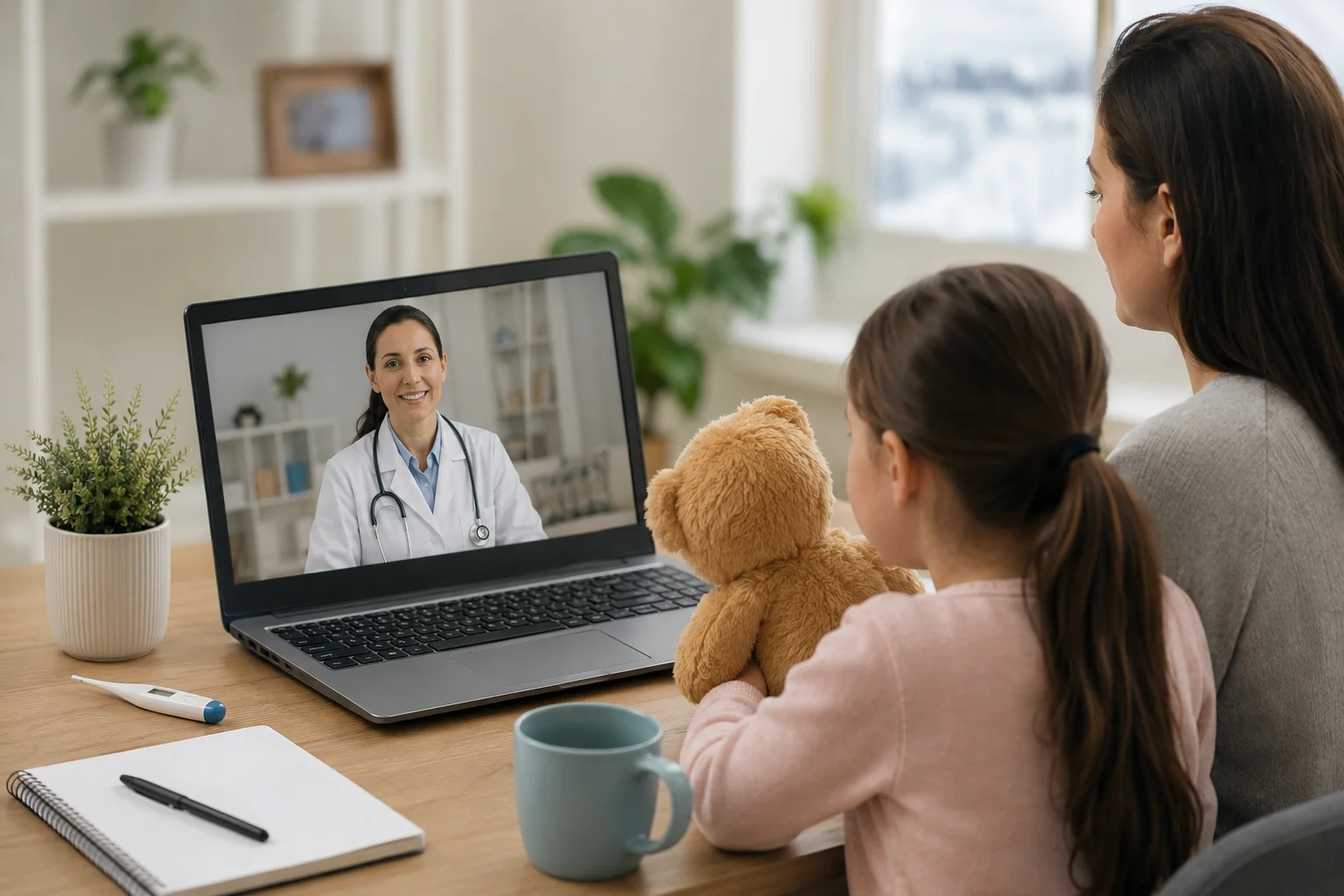
Giving your child the attention they require doesn’t have to mean long drives through snow, a missed workday, or hours spent waiting in a waiting area. That’s why telehealth has become an important tool for families in Alaska. If you’re living in Anchorage or in a remote town online, it’s possible to provide your child with quick, high-quality treatment from the comfort of your home.
To make the most of the experience, just a bit of preparation can go a long way. Here’s a quick Pediatric Telehealth Visit Checklist to ensure that you’re confident and ready when your child’s appointment starts.
What Do You Need Before the Visit Starts?
Making sure you are set up prior to the time can ease stress. Here’s a list of what you should have prepared:
- A device that works, such as a smartphone, laptop, tablet, or computer equipped with a microphone and camera
- An internet connection that is stable — Wi-Fi is ideal to test it just in a couple of minutes prior to the phone call.
- A peaceful, well-lit area. Natural light works fantastically, and it is important to reduce background noise
- The telehealth application or link to download it or open it before your appointment, but not during the
- An alternate plan in case your internet goes down, you should know the clinic’s phone number to keep the appointment by phone
Checking your setup before the day is among the most simple steps you can take to prevent panic at the last minute.
What Information Should You Have Ready for the Doctor?
Doctors should be able to assess your child’s needs quickly in a virtual appointment. Making sure they have the right information helps them to help you more quickly.
Make sure you have this information on hand:
- The full name of your child, the date of birth and the weight (a recent weight is particularly beneficial for measuring dosages of medication)
- The current symptoms include when they first started or changed, as well as anything that can make them more or less effective
- Readings of temperature — If your child is feverish, take note of the temperature as well as the time at which it was taken.
- Current dosages and medications, which include supplements or vitamins.
- Allergies are well-known and include medicines
- Recent illness or exposure (like an illness in a family member or classmate)
- The insurance ID, or the member’s card, keep it handy to be ready in the event of a need
The more concisely you are able to explain what’s happening, the more precise and efficient your visit will be.
What Basic Supplies Help During a Pediatric Telehealth Visit?
There’s no need to have a personal medical laboratory; however, a few basic tools can make the experience far more effective:
- Thermometer -to monitor and report on your child’s temperature in a precise manner
- Flashlights can be helpful when your doctor requests that you examine your child’s ears or mouth
- Pulse oxygen oximeter (if you own one) is important for checking oxygen levels when your child is experiencing breathing problems.
- Pen and paper to record instructions as well as medication names. The steps to follow up
A few families consider it beneficial to gently explain the symptoms in plain language while pointing to the camera, such as making a point at the place where it hurts or displaying a rash in proximity.
How Do You Keep Your Child Calm During the Appointment?
Let’s face it — having a child be still for video calls with a doctor can be straightforward. Here are a few tips to help:
- Discuss with your child before the visit to explain to them that the doctor is looking to know how they’re feeling, and it’s safe and easy
- Allowing them to hold a soothing item, such as a blanket or stuffed animal, can make younger children feel safe
- Make sure to have snacks available for toddlers who require an escape
- Be calm and collected. Children are often mirrored by the parent’s mood, and so the more relaxed you feel, the more they’ll be able to respond
For teenagers and older children, it is sometimes helpful to let them talk directly to the doctor. This builds their confidence and helps doctors get a better picture as well.
When Is Telehealth the Right Choice — and When Should You Go In Person?
Telehealth is a great solution for a variety of common concerns that children face, for example:
- Coughs, colds, and mild fevers
- The pain in the ear is a sign of infections
- Itching and rashes
- Pink eye
- Sore throats
- Check-ins for mental or behavioral health
- Check-ups following an appointment
If your child is experiencing difficulty breathing or is suffering from a fever that isn’t going down, is extremely dehydrated, or has suffered an injury, take them to an urgent care clinic or an emergency room immediately. Telehealth is an effective tool, but it’s certainly not an alternative to in-person emergency medical care.
Alaska children’s urgent care and outreach programs are specifically designed to connect children living in rural areas and those who are underserved with the medical assistance they require via telehealth or through coordination of the need for in-person medical care if needed.
What Should You Do After the Telehealth Visit?
The visit doesn’t come to an end until the call is over. Here’s how you can follow up:
- Review or write down the doctor’s instructions immediately following the phone call, while it’s still fresh
- Get any prescription medications promptly
- Check your child’s symptoms for the next 24 to 48 hours.
- Plan a follow-up visit if your doctor suggests one or if your child’s condition isn’t getting better.
- If symptoms become worse before the scheduled follow-up appointment
A simple notepad on your mobile phone that contains dates, temperature, and any symptom changes could be extremely beneficial if you must call back.
Conclusion
The geography of Alaska is unique among other states in the nation. Many families have to travel for hours to visit a doctor, especially in winter when this journey can be extremely hazardous. This is why Telemedicine Alaska has become such an essential part of the healthcare system for many parents.
With a well-designed Pediatric Telehealth Visit Checklist and some preparation, the virtual visit is just as effective as a traditional visit for most issues that are not urgent. In addition, with dedicated services like Alaska Children’s Urgent Care and outreach, families living in the remotest areas of the state can get high-quality care for their children.
If you decide to choose Telemedicine Alaska, you’re not only choosing convenience, you’re choosing a health system that was designed specifically for Alaskan families. Trustworthy, caring, and easily accessible, regardless of the location you reside in.
FAQs
You book an online visit, share your child's symptoms, and join a secure video call from your phone, tablet, or computer. The provider talks with you, observes your child on video, and recommends next steps like home care, a prescription where appropriate, or an in-person visit.
Telehealth works best for common, non-emergency problems like colds, mild fevers, rashes, pink eye, ear pain, and minor stomach issues. It's also useful for follow-up visits and for quick medical advice without long travel.
You need a phone, tablet, or computer with a working camera and microphone, and a stable internet connection. A quiet, well-lit spot and your child being present during the call also help.
Yes, for the right conditions. Visits happen on secure, HIPAA-compliant platforms, and providers refer you for in-person or emergency care if your child needs a hands-on exam or urgent treatment. Telehealth is not for emergencies.
Yes. You can book a video visit from home and get guidance on your child's symptoms, treatment, and whether they need to be seen in person. This saves travel time, especially in remote areas or bad weather.
Keep your child's temperature and weight ready, and make a list of symptoms, current medications, allergies, and questions. Have your child nearby, and if possible, keep a thermometer and any medicine bottles within reach.
Yes, for most fevers in older babies and children, a provider can assess symptoms and advise on care at home. But a fever in a baby under 3 months, or a fever with trouble breathing, stiff neck, seizure, or unusual drowsiness needs urgent in-person or emergency care. Call 911 or go to the nearest ER.