


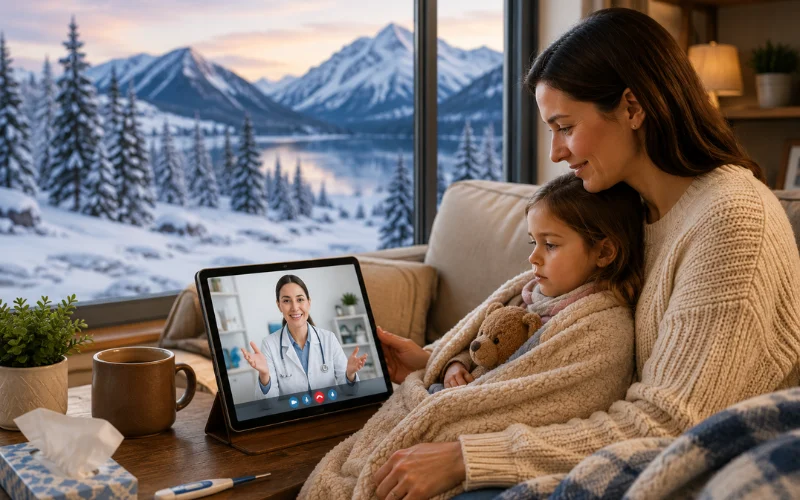
A video visit with a pediatric provider can settle most minor childhood illnesses without a single mile of travel. With child urgent care online, you (or a school nurse) connect by screen, the provider asks questions and looks at your child, and you leave with a plan. That plan might be fluids and rest, a prescription, or an instruction to get to an emergency room now.
The hard part is knowing which of those you’re facing, so this page spends as much time on warning signs as it does on convenience.
When your child is sick and there’s no doctor nearby
Alaska doesn’t make this easy. The American Academy of Pediatrics (AAP) lists geography and weather as standing barriers to getting kids to a doctor, and in one rural case it described, the closest pediatric primary care provider sat more than 100 miles from the school. A student there began coughing and breaking out in hives. The school nurse reached a pediatric provider by video, and the AAP says the outcome could have been very different without that call (AAP: Connecting kids to doctors in remote Alaska).
Until recently that left two options: wait and worry, or travel. A video visit adds a third.
Telemedicine for kids in rural Alaska: how it works
Booking an online doctor for a sick child in Alaska starts with a request on the contact page or a call to (907) 630 0574. Once you’re connected over secure video, the provider asks when symptoms started, what the temperature is, whether your child is eating and drinking, and which medicines they’ve had. Then they look at what a camera can show: a rash, a throat, how hard your child is breathing, how they act.
Have these ready before the visit starts:
- The temperature as an actual number. “Felt warm” gives the provider nothing to work with, a point the pediatricians at COPC make in their fever guide.
- The time the symptoms began.
- Any medicines your child takes, with the bottles within reach.
- Allergies and anything relevant from their history.
- A charged phone or tablet.
If you need a same day doctor for your child, say so when you book and give the start time of the symptoms. Availability depends on the provider’s schedule that day.
Virtual urgent care for kids in Alaska: what gets treated
Fevers, coughs and colds, allergies, rashes, ear pain, stomach upsets, pink eye and small injuries all fit a video visit. Colds and flu are a natural match for pediatric cold and flu telemedicine in Alaska, because most of the visit is questions, observation and a plan for the next few days. The full list of what’s offered sits on the services page.
A visit ends one of three ways: home care, a prescription when it’s medically needed, or a referral for an in-person exam. Minor illness treatment by virtual visit often lands in the first bucket, which surprises parents who expected a prescription.
A camera can’t listen to lungs or swab a throat. When a provider can’t tell from the screen, they’ll say so and send you in, which is the system doing its job.
It also helps to pick a provider who treats children every day. Urgent care pediatrics is its own skill set: dosing depends on a child’s weight, and the warning signs in a toddler look nothing like those in an adult. The medical team page explains who you’d be speaking with.
Fever, newborns and the symptoms that shouldn’t wait for video
Age decides almost everything with a fever. For a baby 2 months or younger, a rectal temperature of 100.4°F or higher counts as an emergency, so skip the video and go in (WebMD). Alaska pediatric telemedicine for newborn questions is fine for feeding, sleep and rashes, but a fever in a baby that young goes straight to an emergency room.
Pediatric telemedicine for fever in Alaska earns its keep in the in-between cases. The AAP says to call a doctor right away if a child with a fever looks very ill, is unusually drowsy or is very fussy, or if the temperature climbs above 104°F repeatedly (HealthyChildren.org). The same page says to call if your child still acts sick after the fever comes down. A school-age child whose fever runs past three days is another good reason to book a visit (COPC).
Call 911 or go to the nearest emergency room if you see any of these:
- Trouble breathing, or blue, purple or gray skin or lips (Bay State Health)
- A seizure
- A child you can’t wake
- A purple or red spotted rash that doesn’t fade when you press on it
- No wet diaper in 8 hours, no tears and sunken eyes (COPC)
Pediatric telemedicine for schools in Alaska
A virtual sick visit for school-age kids in Alaska often starts in the nurse’s office instead of at home. The AAP notes that school nurses in rural communities rarely have direct access to pediatric providers when a child falls ill or gets hurt, and its funded project connects them by video with board certified pediatric providers (AAP project summary). The same project aimed to give families written care instructions afterward.
For a parent, same day virtual care at school means a call from the nurse and a plan, not a surprise pickup and a long drive. The AAP reports quicker recoveries and fewer missed school days from the program. The project set a goal of a 5% attendance increase at four schools, but I couldn’t find published results for it.
Alaska Children’s Urgent Care and Outreach runs this work. According to its EMR vendor, it offers urgent care for children in Alaska through in-person visits, school programs, outreach and statewide telemedicine (Experity case study).
The Anchorage School District lists telemedicine visits at school through the same group on its nurse’s page. Ask your school nurse whether your district takes part and what permission they need from you.
Towns off the road system
Virtual child urgent care in Juneau and pediatric telemedicine in Sitka follow the same steps as anywhere else in the state: book, connect, get a plan. The difference shows up on bad-weather days, when a trip to a clinic or hospital isn’t realistic and a screen still works.
What the research says, and what it doesn’t
The strongest Alaska evidence for pediatric telemedicine in Alaska is about hearing, not coughs. In a randomized trial across 15 rural communities from 2017 to 2020, about 1,500 children were screened at school, and those referred through telemedicine reached follow-up care 17.6 times faster (PCORI). Nearly 70% of that group got follow-up, against about 30% on the standard route (TechTarget).
That doesn’t prove a virtual sick visit works as well as an exam room. It does show that virtual pediatric care in Alaska’s rural communities gets children into the system when distance would otherwise stop them.
Questions parents ask before the first visit
Can the provider prescribe medicine? Yes, when it’s medically needed and state rules allow it. Plenty of visits end with home care instead.
What if our internet is weak? Tell the scheduler when you book. Phone consultations are an option for some visits.
Can we use it for follow-ups? Yes. A provider can check how recovery is going and answer questions after the first visit, which saves a second trip.
Set it up before the 2 a.m. fever
Save (907) 630 0574 in your phone today. Write your child’s weight and allergies in a note on the same phone, and keep a thermometer where you can find it in the dark. That cuts the first five minutes out of any urgent visit, virtual or not.
FAQs
Common illnesses include flu, colds, allergies, as well as skin rashes, ear infections, stomach problems, pink eye, and many other health issues that are not emergency-related.
Yes. Telemedicine makes use of secure platforms for healthcare and permits qualified medical professionals to examine symptoms, provide advice, and suggest treatment options in a safe manner.
Emergencies such as trouble breathing, serious injuries, unconsciousness, and other urgent medical issues require immediate medical attention on the spot.
In a majority of situations, health professionals may prescribe the appropriate medication when medically required and allowed by regulations.
Absolutely. Telemedicine can help families living in remote and rural areas to access healthcare services for their children without the need for lengthy travel. This improves accessibility to healthcare across Alaska.