


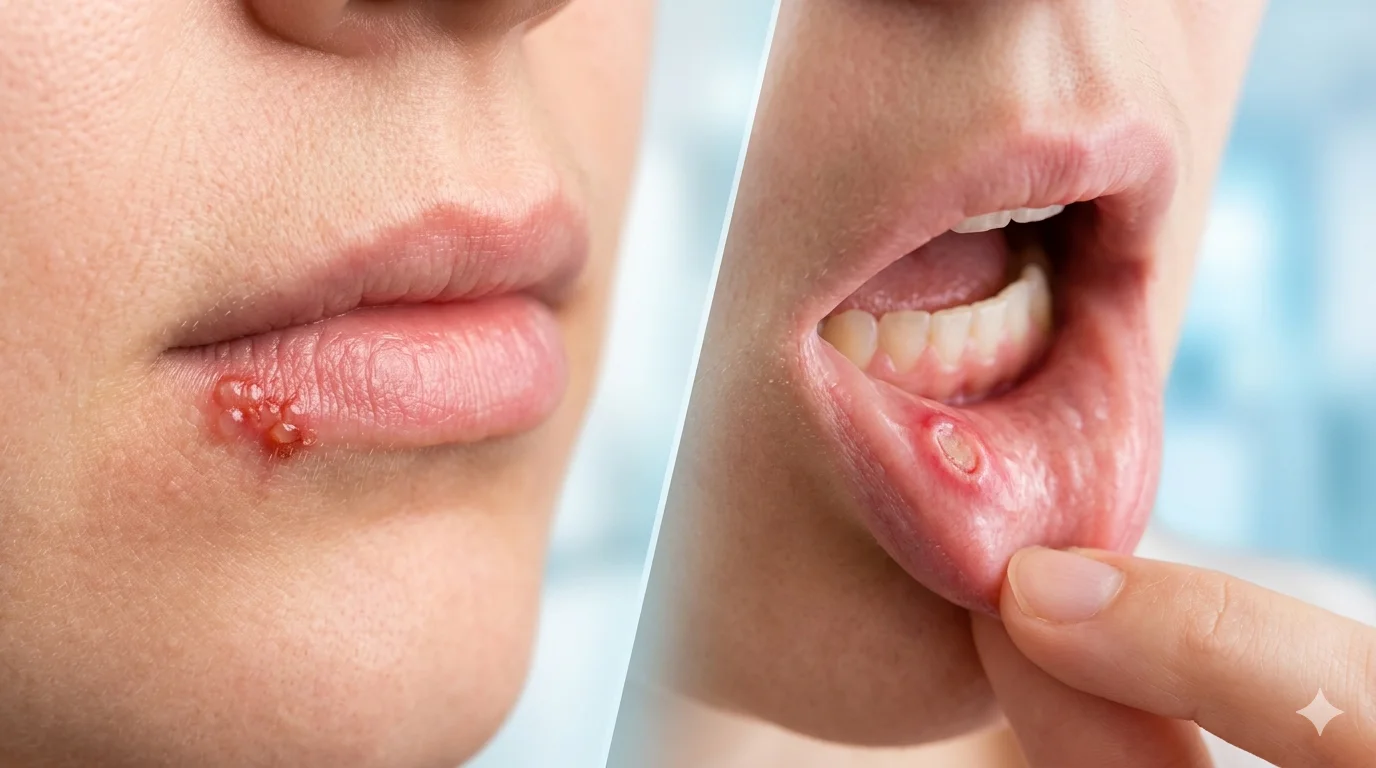
Many suffer from painful sores around or in the mouth at one time throughout their life. But there are many different types of mouth sores that are not created equal. One of the biggest problems is the distinction between cold sores and canker sores. Although they look like they do at first, they are different in their signs, causes, and treatment methods.
Knowing Cold Sore as opposed to Canker Sore will assist you in selecting the appropriate solutions at home, lessen discomfort, and determine when you should seek medical attention.
What Is a Cold Sore?
Cold sores are tiny blisters or a group of blisters that typically appear around or on the mouth, lips, chin, or nose. Cold sores are caused by Herpes Simplex Virus (HSV-1), which is extremely contagious.Common signs of cold sores are:
- The sensation of burning or tingling before the sore is visible
- Small blisters containing fluids
- There is swelling and redness around the affected region
- Scabbing and crunching as the sore heals
- Mild discomfort or pain
What Is a Canker Sore?
A canker sore is a tiny ulcer that appears within the mouth. Unlike cold sores, these sores do not result from viruses and aren’t transmissible.They are typically:
- Inside the cheeks
- On the tongue
- Inside the lips
- Soft palate
Common symptoms are:
- Sores of the round or oval shape with an orange, white, or gray center
- The sore is red with a red border.
- The pain can be felt while drinking, eating, or speaking
- Tingling or burning sensations before the sore begins to develop
Cold Sore vs Canker Sore: Key Differences
While both ailments affect the mouth, there are a few important distinctions.Location
- Cold sores usually appear in the mouth, around the lips, or even on the skin.
- Canker sores can develop in the mouth.
Cause
- Cold sores: Caused by the herpes simplex virus.
- Canker sores are not caused by a virus and are not contagious.
Appearance
- Cold sores: Initially, they appear as a swollen, fluid-filled blister that will later become crusty.
- Canker sores are characterized by superficial ulcers with an orange or white center.
Contagiousness
- Cold sores: Very infectious through contact.
- Canker sores: Not contagious.
Duration
- Cold sores heal in 7-14 days.
- Sores of the canker usually heal in one to two weeks.
How to Treat Cold Sores at Home
Although there isn’t a cure for HSV-1, a variety of ways to treat it at home can ease symptoms and speed up healing.-
Apply Cold Compresses
-
Keep the Area Clean
-
Use Over-the-Counter Creams
-
Stay Hydrated
-
Avoid Triggers
How to Treat Canker Sores at Home
The majority of canker sores heal themselves on their own. However, certain treatments can speed up the healing process more pleasantly.-
Rinse thoroughly with Salt Water
-
Avoid Irritating Foods
-
Maintain Good Oral Hygiene
-
Use Protective Oral Gels
-
Eat Nutrient-Rich Foods
When Should You Seek Medical Attention?
Although most mouth sores heal without difficulty, a medical exam could be required in the event of:- The sore can last longer than two weeks.
- You feel extreme discomfort.
- It becomes difficult to eat or drink.
- The appearance of sores is frequent.
- There is a fever or symptoms of an infection
- Cold sores may spread to the eye or to other areas
Conclusion
Understanding the difference between a cold sore and a canker sore is crucial since both conditions have distinct signs, causes, and treatment options. Cold sores result from an infection caused by a virus and are transmissible, whereas canker sores are non-infectious ulcers that form inside the mouth. Knowing the distinctions will help you treat your symptoms efficiently and select the appropriate home care method. For those who require fast and reliable medical advice, Telemedicine Alaska is a reliable partner with decades of experience helping patients deal with many health issues. If you need expert advice on recurring mouth sores and treatment options or continuous symptom management, Telemedicine Alaska provides accessible and patient-focused services from skilled health experts.FAQs
Cold sores are usually seen on the mouth as blisters and are caused by an infection. The sores of the canker form inside the mouth and cause painful ulcers. They are not transmissible.
Yes. Cold sores can be caused by the herpes simplex virus. They can be spread by touching, kissing, or sharing personal things.
Yes. Stress is a frequent cause of both conditions and could increase the chance of flare-ups, outbreaks, or even flare-ups.
Far far away, behind the word mountains, far from the countries Vokalia and Consonantia, there live the blind texts. Separated they live in Bookmarksgrove right at the coast
It is recommended to seek medical attention in the event that the sore lasts more than two weeks. becomes extremely painful, appears frequently, or is accompanied by other symptoms, such as nausea or vomiting.