


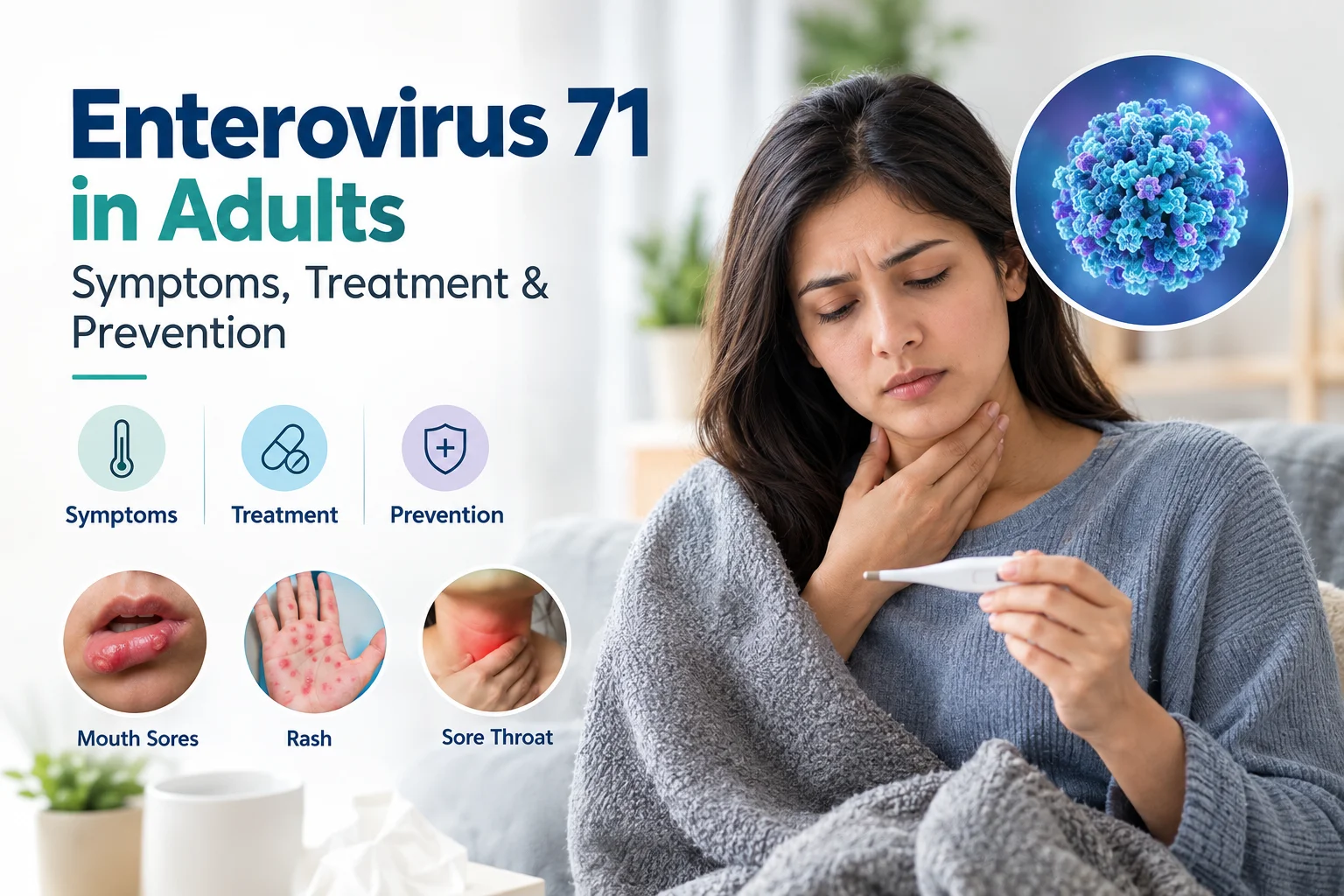
Enterovirus 71 (EV71), also called EV-A71, is a non-polio enterovirus that causes hand, foot, and mouth disease (HFMD). In adults, enterovirus 71 can cause fever, sore throat, sores in the mouth, a rash, aches, and fatigue, but some adults may have no symptoms. Most infections are mild, but some can affect the nervous system and require urgent medical care.
Can Enterovirus 71 infect adults?
Can adults get Enterovirus 71? Yes. But children are more susceptible to infection and exhibit noticeable symptoms. Adults may have milder illness or be asymptomatic due to some protection from previous exposure to related enteroviruses. EV71 is one of a group of viruses that can cause HFMD. An adult living with or caring for an infected child may be exposed to respiratory secretions, saliva, blister fluid, contaminated surfaces, or stool.What are the symptoms of Enterovirus 71 in adults?
Signs and symptoms of enterovirus 71 vary from person to person. Some of the common symptoms may include fever, sore throat, mouth sores or blisters, skin rash, and muscle or body aches. Some people may have only a few symptoms, while others develop the classic features of hand, foot, and mouth disease.Possible symptoms of EV71 infection are:
- Fever.
- Throat, sore
- Exhaustion
- Headache
- Muscle or body pains
- Painful sores or blisters in the mouth
- Red spots or small blisters on hands and feet
- Rash of the skin
- Loss of appetite
Enterovirus 71: what is the adult impact?
For most adults, EV71 causes a mild illness that resolves with supportive care. Nevertheless, EV71 can rarely cause nervous system complications, such as meningitis or encephalitis. Adults with severe neurological disease are less frequently affected than young children. But a grown-up with odd neurological symptoms should not disregard them, especially if they occur quickly. If you have any of the following warning signs, call your doctor or get emergency care right away:- Severe or increasing headache
- Stiff neck (neck ache)
- Confusion or excessive drowsiness
- Fits
- New weakness in one arm or one leg
- Walking difficulty
- Shortness of breath
- Severe dehydration or inability to take in fluids
How is enterovirus 71 transmitted?
EV71 is transmitted by respiratory secretions, saliva, vesicular fluid, stool, and fomites or surfaces.Common routes of transmission are:
- Being exposed to droplets from an infected person when they cough, sneeze, or talk
- Direct contact with an infected person.
- Contact with blister fluid or contaminated surfaces, then mouth, nose, or eyes.
- Touching infected stool, particularly when changing diapers or after using the toilet without washing hands properly.
What is the treatment of Enterovirus 71 in adults?
At present, there is no specific routine antiviral treatment for EV71 infection. Treatment generally focuses on relieving symptoms and keeping the person hydrated while the immune system fights the infection.If your illness is mild, your health care professional may recommend:
- Enough fluids
- Sleep
- Right medicine for fever or pain
- Soft foods and cool liquids if mouth sores make eating uncomfortable.
Monitoring for symptom deterioration
EV71 is a viral infection, so antibiotics will not work. Hospital care and supportive treatment may be needed if serious neurological or other complications develop. Do not take medicines because they have been given to somebody else. If you have other medical conditions or take regular medicines, check with a healthcare professional about which options for relieving symptoms are best for you.How long do symptoms of Enterovirus 71 last in adults?
Mild EV71-associated illness usually improves as the infection clears. In EV71-induced hand, foot and mouth disease, symptoms usually resolve within about 7 to 10 days, although the actual duration of illness can be variable. Don’t just measure recovery by the rash disappearing. If the fever continues, symptoms worsen, or neurological symptoms develop, see a healthcare professional and don’t wait for the expected recovery period.Recovery time for enterovirus 71 in adults
Most adults with a simple infection get better in one to two weeks or so. For some individuals, fatigue or other symptoms may take longer to fully resolve. Recovery may take longer in case of a severe illness or if there are complications. Adults with weakened immune systems may need more frequent medical monitoring. A common error is to concentrate only on the skin rash and ignore hydration or neurological symptoms. If you can’t drink enough fluids or have symptoms like a severe headache, confusion, weakness, or trouble breathing, it is better to seek medical evaluation than just wait for recovery.How can Enterovirus 71 infection be prevented in adults?
There is no EV71 vaccine available widely in the United States, so routine infection-control measures remain important.You can lower the risk by:
- Wash your hands with soap and water for at least 20 seconds.
- Avoiding a person who is actively ill and sick.
- Not sharing drinking cups, eating utensils, or personal items.
- Wiping down high-touch surfaces.
- If possible, avoid contact with blisters and infected secretions.
Summary
Enterovirus 71 infection in adults is typically a mild viral illness, but may rarely cause severe neurologic complications. Knowing the common symptoms and how the virus spreads will help adults respond appropriately. Good hand hygiene and awareness of warning signs can also help. Telemedicine Alaska is your reliable partner when you need convenient medical advice for common illnesses and symptoms. Our telemedicine services can help you understand your symptoms and help you decide on the next best step. If you are experiencing serious or emergency symptoms, seek immediate medical care in person.FAQs
Yep. Symptoms of the EV71 infection can include fever, sore throat, tiredness, mouth sores, rash, and body aches.
Yes. Symptoms in adults may be mild or absent, and not all adults will develop the typical rash on the hands, feet, and mouth.
Yes. Symptoms early on can resemble those of other viral illnesses, so symptoms alone cannot reliably identify EV71.
Yes. EV71 can potentially be transmitted from an infected adult via respiratory secretions, saliva, blister fluid, stool, and contaminated surfaces.
No. EV71 is a virus; antibiotics do not treat the infection. Treatment of uncomplicated illness is usually supportive.