


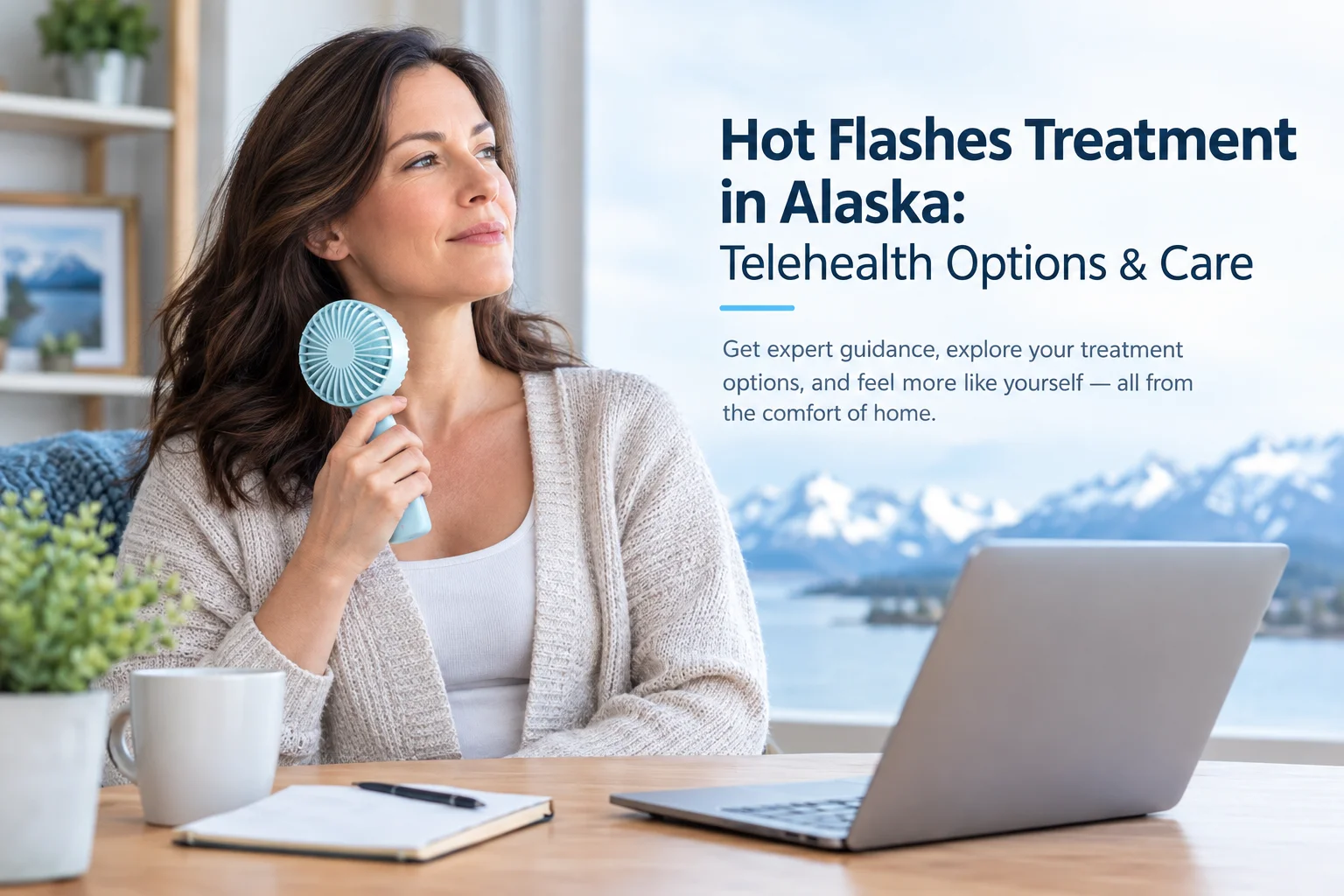
Yes, you can talk to a healthcare provider about hot flashes and menopause symptoms using telehealth in Alaska. You can schedule an online appointment to discuss your symptoms, review your medical history, discuss lifestyle changes, and determine if prescription treatment is right for you. Depending on your situation, your provider might also recommend an in-person exam or testing.
If you are looking for Hot Flashes Treatment in Alaska or hot flashes treatment Alaska telehealth, online menopause care can be a convenient way to begin getting medical guidance without having to immediately travel to a clinic.
What are hot flashes and why do they occur?
Hot flashes are sudden feelings of intense heat that may spread over the face, neck, chest, or upper body. They can cause sweating, flushing, chills, and discomfort and are common during the menopausal transition.
Hormonal changes that occur during perimenopause and menopause can affect the body’s temperature regulation system. Hot flashes that happen during sleep are often called night sweats.
Some have infrequent symptoms, but others have hot flashes many times a day that can interfere with sleep, work, exercise, or daily activities.
Can I Get Hot Flash Treatment Through Telehealth?
Yes. You can also talk about your menopause symptoms with a qualified healthcare provider via telehealth from home or wherever it is convenient for you.
Your provider can review your symptoms, medications, medical history, and treatment goals during an online appointment. Then they will be able to discuss suitable options and decide if you require further evaluation.
Telehealth does not substitute all forms of medical care. If your symptoms require a physical exam, lab work, or other procedure, your provider may recommend an in-person visit.
What can an online doctor check during a hot flashes appointment?
A provider’s first step is generally to assess your symptoms and overall health—not prescribe a medication.
You might be asked:
- How often do you get hot flashes
- How long have they been going on
- Whether they are by day or night
- If they visit you in your sleep
- Alterations in your menstrual cycle
- Other symptoms of menopause
- Current medications and supplements
- Past medical and family history
- Treatments that have already been tried
A short symptom diary can be a useful preparatory exercise. Note when you have hot flashes, what may have caused them, and how they affect your sleep or daily life. This can help make a telehealth appointment more efficient.
What are the treatment options for hot flashes in Alaska?
Treatment depends on your symptoms, medical history, age, menopause stage, and personal preferences. Common options include lifestyle changes, hormone therapy, and nonhormonal prescription medicines.
| Treatment | What it may involve |
| Lifestyle changes | Cooling strategies, exercise, healthy habits, and identifying triggers |
| Hormone therapy | Estrogen alone or estrogen with a progestogen when appropriate |
| Nonhormonal medication | Prescription medicines designed or used to reduce hot flashes |
| Follow-up care | Monitoring symptoms, side effects, and treatment response |
Hormone therapy is considered the most effective treatment for bothersome hot flashes for appropriate candidates, but its benefits and risks need to be considered individually.
Can lifestyle changes help ease hot flashes?
Yes. Lifestyle changes may help some people cope with mild or moderate symptoms and may also be used in conjunction with medical treatment.
The National Institute on Aging recommends knowing your personal triggers and employing practical cooling strategies. Keeping your bedroom cool, dressing in layers, and using a fan can be helpful.
Some people find that caffeine, alcohol, spicy foods, stress, or warm environments can trigger symptoms. Triggers are different for everyone, so a symptom diary can often be more useful than a long list of things to avoid.
Regular physical activity, healthy eating, and stress management techniques can also support overall health during menopause.
What are the medications used to treat hot flashes?
If lifestyle measures are not enough, then there are a number of prescription options to consider.
FDA-approved for menopausal hot flashes: Low-dose paroxetine and fezolinetant. Other drugs that may sometimes be used to treat hot flashes include some antidepressants, gabapentin, and oxybutynin.
Fezolinetant is a nonhormonal drug approved specifically for the treatment of moderate to severe menopause-associated hot flashes. But the FDA warns it can rarely cause serious liver injury and requires blood testing of the liver before and during treatment.
The prescription treatment should therefore be discussed with a qualified healthcare professional and not chosen based solely on information found online.
Hot flashes Hormone therapy: Is it for you?
Some women find hormone therapy helpful for troublesome hot flashes and night sweats. This may be estrogen alone or in combination with a progestogen, depending on the situation.
Not everyone is suited for hormone therapy. A healthcare professional might consider factors such as age, time since menopause, medical history, cardiovascular conditions, history of blood clots, certain cancers, liver disease, and unexplained vaginal bleeding.
So, the decision should be individualized and not simply based on age or symptom severity.
How to get ready for an online hot flashes appointment
Getting a few details ready before your appointment can help your provider better understand your situation.
- Monitor your symptoms. Pay attention to how often hot flashes occur and if they disrupt your sleep.
- List your medicines. Prescriptions, Over-the-counter medicines, vitamins, and supplements.
- Changes in menstrual cycle. Track changes to your period and important menopause information.
- Prepare your medical record. Incorporate key preconditions and processes.
- Write down the questions. Ask about treatment options, possible side effects, and follow-up care.
- Next steps to discuss. Inquire about testing or an in-person visit if needed.
How can I get hot flashes treatment through telehealth in Alaska?
If you live in Alaska and want to explore menopause care online, it can be a simple process:
- Schedule a telehealth appointment with a qualified provider who can see patients in Alaska
- Please describe your symptoms, your medical history, and your medication history.
- Talk with your doctor about treatment options for your situation.
- Follow all testing recommendations your provider decides are needed.
- Go to follow-up appointments to see if your treatment is working.
Telehealth can be especially helpful when distance, weather, transportation, or work schedules make it difficult to visit the clinic routinely.
Does telehealth assist with menopause symptoms in remote Alaska?
Yes. Telehealth can provide a healthcare conversation for people in remote or rural areas without the need to make a trip to a larger medical center right away.
Talking about hot flashes, night sweats, sleep problems, and other menopause concerns can be done via an online appointment. If you need more care, your provider can talk about what kind of in-person evaluation or testing might be appropriate for you.
Telehealth is not a substitute for all types of medical care. It is important to consider telehealth as part of your overall healthcare.
How can Telemedicine Alaska assist with hot flashes?
If you are looking for Hot Flashes Treatment in Alaska, Telemedicine Alaska offers an easy way to begin talking to a healthcare provider online about your symptoms.
A telehealth visit is a great way to share your story, talk about issues surrounding menopause, discuss potential treatment options, and get a sense of whether you need to be further evaluated. The decisions about your treatment are based on your personal health history, not a “one-size-fits-all” approach.
Telemedicine Alaska can be a trusted partner for accessible and convenient menopause care for Alaska residents who struggle with traditional clinic visits, while helping you understand when additional in-person medical care may be needed.