Every year, the Alaska influenza season can bring problems for those living in remote villages, towns, and areas of travel. The cold winter temperatures, long winters, and a lack of access to healthcare facilities may make it challenging for people to obtain immediate medical assistance when symptoms of the flu show up. For those who live away from hospitals or travel across Alaska, being aware of how to be prepared is essential.
In the flu season, minor illnesses can quickly become dangerous if medical attention is put off. This is why a large number of people living in and traveling around the state rely on the best telemedicine services to get fast and reliable medical assistance anywhere in Alaska.
Understand the Common Flu Symptoms
The flu is usually sudden and can include:
- Chest or fever
- Sore throat and cough
- Achy body
- Headache
- Nose blots or runny
- Tiredness and weakness
- Diarrhea or vomiting in certain situations
People who live in areas that are remote should be vigilant about their symptoms as serious flu can cause respiratory problems, dehydration, or even infections if not treated.
Prepare Before Alaska Flu Season Starts
Making preparations is one of the most effective ways to remain protected during the Alaska influenza season. If you live in a remote area without medical attention, ensure you have all the essential items at hand.
Important things to keep in mind:
- Pain medicine and fever
- Thermometer
- Medicine for cough
- Drinks containing electrolytes and fluids
- Food items that are healthy and nutritious
- Masks for face and sanitizers
- Emergency contact numbers
It’s also beneficial to schedule flu vaccines prior to the time that winter gets underway. Vaccines lower the risk of serious illness and safeguard families and communities.
Use Telemedicine for Fast Medical Help
One of the major issues that plagues Alaska is the distance between the homes and health centers. The icy roads, snowstorms, and remote locations could cause travel to be dangerous in the flu season.
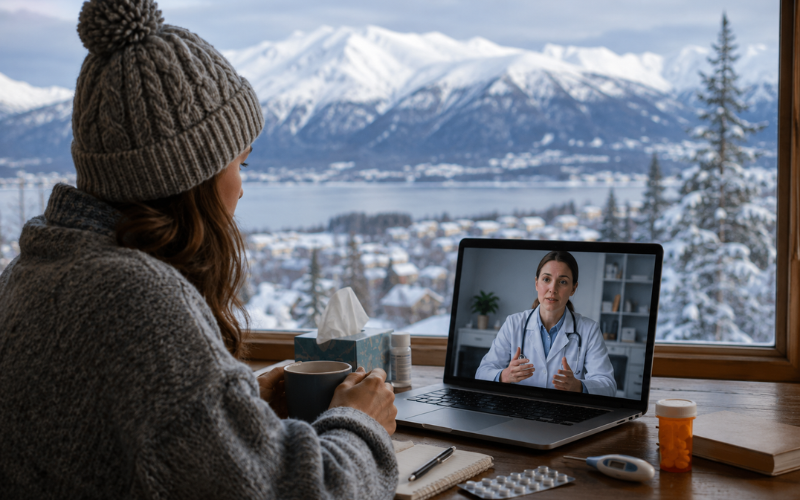
This is the reason why top service for telemedicine is becoming a necessity for Alaska residents and tourists. Telemedicine allows patients to communicate with licensed healthcare professionals by video or telephone calls, without having to leave home.
Virtual healthcare may help:
- Flu symptom evaluation
- Prescription guidance
- Treatment guidelines
- Consultations for follow-up
- Medical advice for children and seniors.
For those living in remote areas Telemedicine reduces travel time and helps avoid unnecessary travel when there is severe weather conditions.
Stay Hydrated and Rest Properly
The effects of flu can be swiftly weakened in the body. Hydration and rest are essential to recover.
Tips for recovery that can help:
- Drink warm fluids regularly
- Make sure you get enough rest
- Do not engage in intense physical activities.
- Consume healthy food items like soup, fruit, and even vegetables
- Be sure to stay inside in cold temperatures
Residents living on their own in remote regions should remain connected to relatives or friends during illness in the event of emergency assistance being required.
Know When You Need Emergency Care
Although most flu-related illnesses can be treated with a home remedy or online care, there are some signs that need immediate medical attention.
Seek urgent medical care if you experience:
- Trouble breathing
- Chest pain
- A high fever that doesn’t improve
- Severe dehydration
- Dizziness or confusion can be a problem.
- Blue lips or a smile
- Symptoms are getting worse after improvement
Children, seniors, and people suffering from chronic illnesses are at a higher danger when it comes to the Alaska flu season. They should not ignore any serious signs.
Protect Others Around You
Flu is a fast-moving disease, particularly in camps, homes, and small towns.
Simple ways to limit the spread of flu:
- Hands should be cleaned regularly.
- Cover coughs and Sneezes
- Beware of sharing personal items
- Surfaces that are frequently cleaned and touched
- Keep your home clean if you are sick
Even in remote places, it is crucial to prevent disease as access to healthcare is very limited.
Virtual Healthcare While Traveling in Alaska
A lot of people travel to Alaska to work, go on tourism, or engage in other outdoor pursuits. In the event of getting sick, travel can be stressful when medical facilities are located far from where you are.
Virtual healthcare, when traveling in Alaska, lets travelers access medical care from any location with a mobile device and an internet connection. If someone is in a remote hotel or driving along isolated roads, or visiting towns in the middle, telemedicine gives the ability to receive expert healthcare advice without the need for long-distance travel.
The traveler should be aware of:
- A mobile phone is charged
- Internet access, if it is possible
- Information about medical history
- Emergency contact numbers
- Health insurance details
The ability to access telemedicine when traveling can provide peace of mind and quicker assistance in the event of an unexpected illness.
Conclusion
Traveling to or from Alaska during flu season can be difficult, particularly when medical attention is distant. Making sure to prepare early, recognizing signs of drinking enough water, and making use of telemedicine can help individuals manage the flu in a safe manner and avoid complications.
For reliable virtual healthcare while traveling in Alaska, Telemedicine Alaska provides an online medical service that is trusted for workers, residents, and tourists who travel to remote regions. With easy access to medical experts, Telemedicine Alaska helps people receive prompt medical care throughout Alaska’s winter flu seasons without the strain of traveling for long distances.